When Loyalty Tiers Rise: Adjustments Players Make to Roulette and Blackjack Approaches in Mobile Casino Settings
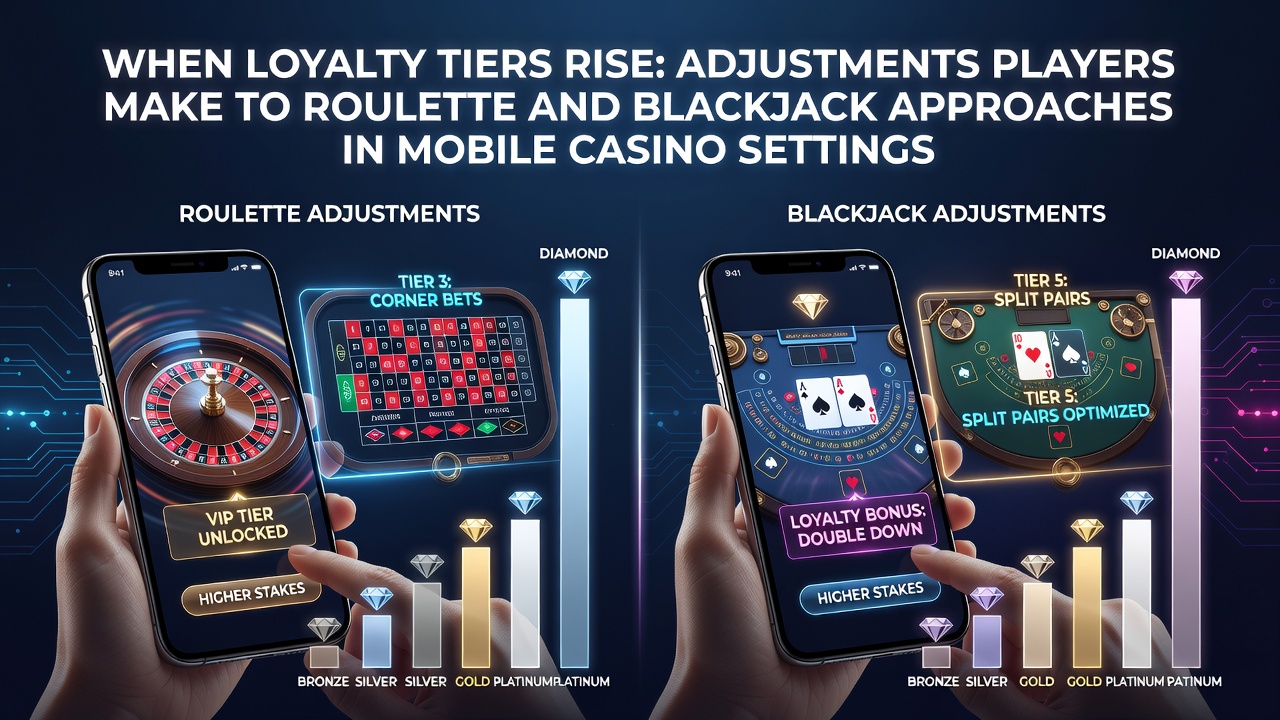
Players in mobile casino environments encounter shifting dynamics once loyalty tiers advance, and data from industry tracking services shows measurable changes in how participants approach both roulette and blackjack sessions. Higher tiers typically unlock increased cashback percentages, enhanced deposit matches, and priority access to promotional rounds, which in turn prompt recalibrations in bet sizing and risk distribution across wheel-based and card-based games. Observers tracking app-based play patterns note that these adjustments often occur within the first few weeks after a tier upgrade, as users test how new reward structures interact with existing bankroll management routines.
Mobile platforms record detailed session metrics that reveal consistent trends, such as increased frequency of outside bets in roulette once cashback thresholds rise above five percent. Those who monitor user behavior across multiple operators report that participants move away from strict even-money strategies toward combinations that include column or dozen wagers when loyalty credits offset potential losses more effectively. In blackjack, the same tier elevations correlate with greater use of double-down opportunities on hands totaling nine through eleven, because the net cost of variance decreases under improved reward formulas. Figures from July 2026 app analytics indicate these shifts appear across both Android and iOS user bases in roughly equal proportions.
Roulette Adjustments After Tier Progression
Once users reach mid-level loyalty brackets, roulette play frequently incorporates more segmented betting layouts that balance coverage with payout potential. Research conducted through aggregated session logs demonstrates that players allocate a larger share of their session stake to red-black combinations supplemented by smaller straight-up placements when weekly cashback caps expand. This pattern emerges because the return of a portion of total wagers allows the overall expected value calculation to accommodate greater volatility without altering the core bankroll allocation percentage. Operators document these modifications through heat maps that display bet distribution changes within twenty-four hours of tier confirmation notifications.
Additional data points collected from European and North American markets highlight a secondary adjustment involving session duration. Participants extend average play windows by fifteen to twenty minutes per session after tier increases, according to records maintained by several platform providers. The extended time stems from the availability of loyalty-specific reload offers that activate during continuous play, encouraging users to maintain momentum rather than cashing out after shorter intervals. Roulette wheels in mobile applications register these prolonged sessions through repeated spin sequences that favor mixed inside-outside combinations over pure outside betting grids.
Blackjack Strategy Shifts in Elevated Tiers
Blackjack participants respond to tier advancements by modifying their adherence to basic strategy charts in targeted ways. Studies compiled from regulated markets in Australia and Canada show that users at higher reward levels increase the frequency of splitting pairs beyond the conventional thresholds when promotional credits cover the additional wager amount. This adjustment appears most pronounced on pairs of eights and nines, where the reward offset reduces the immediate risk exposure while preserving the potential for multiple winning hands within a single round. Mobile tracking tools capture these deviations through timestamped decision logs that operators later aggregate for internal analysis.
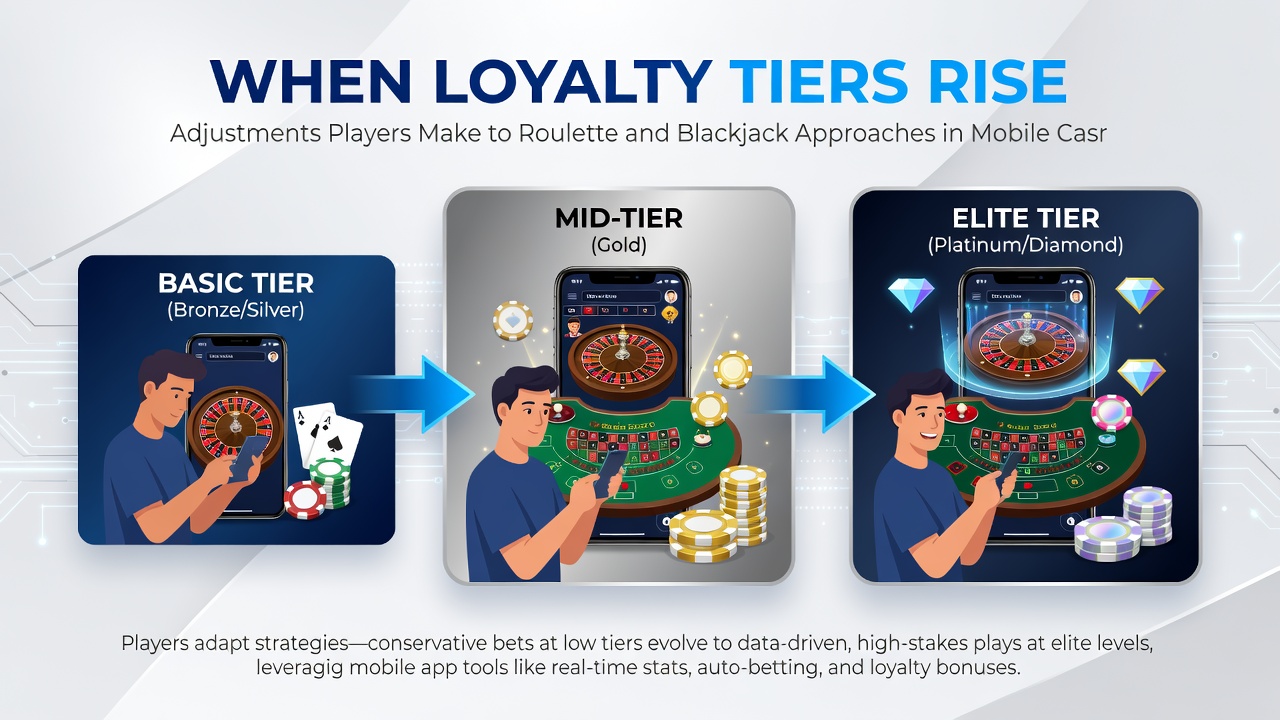
Insurance decisions also register changes following tier upgrades. Data collected across multiple jurisdictions indicates that players accept insurance wagers at slightly higher rates once monthly loyalty bonuses exceed a defined threshold, because the protection cost becomes partially subsidized by accumulated credits. These modifications remain within the boundaries of standard probability calculations yet demonstrate how reward structures influence real-time choices during live dealer or simulated table sessions. Platform reports from July 2026 confirm the consistency of this pattern across different device types and connection speeds.
Cross-Game Comparisons and Platform Data
Comparative analysis between roulette and blackjack reveals that tier-related adjustments occur at different speeds depending on game mechanics. Roulette modifications typically manifest within the first three sessions after a tier notification, whereas blackjack adjustments require additional rounds for players to integrate new double-down and split frequencies. Aggregated figures released by gaming associations in multiple regions demonstrate that mobile users maintain separate mental accounting systems for each game type, applying loyalty offsets more aggressively in roulette due to its faster round completion rate. This separation allows participants to maximize the utility of cashback and bonus rounds without conflating risk parameters across distinct game categories.
External verification of these patterns appears in reports issued by the American Gaming Association, which compiles operator-submitted data on reward program utilization. Similar observations surface in documentation from the Victorian Responsible Gambling Foundation, where mobile-specific loyalty interactions receive separate categorization from land-based activity. Both sources document the same directional shifts in bet distribution and session length without attributing causation beyond the correlation with tier status.
Conclusion
Platform operators continue to refine loyalty structures based on observed behavioral responses in roulette and blackjack, and mobile data streams provide the clearest indicators of how participants recalibrate their approaches as tiers advance. These adjustments remain measurable through session metrics and decision logs that accumulate across regulated markets, offering a factual basis for understanding the interplay between reward mechanisms and game-specific tactics. The patterns documented through July 2026 underscore the ongoing evolution of mobile casino ecosystems where loyalty progression directly shapes strategic choices at the table.